
Airport Vocabulary: From Check-In to Takeoff
The Verb “To Be” Explained, With Examples and Exercises
What are the “to be” verbs?
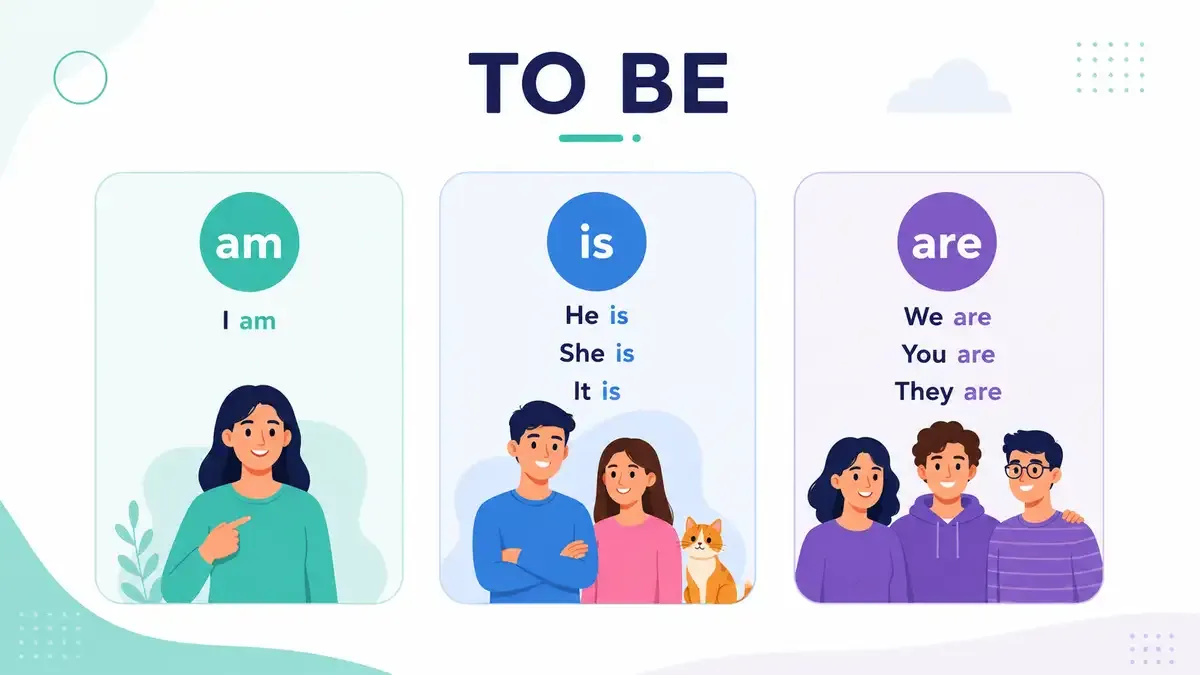
The verb
Here is a quick list of the to be verbs and their functions:
| To be verbs | Function |
|---|---|
| be | bare infinitive |
| am, is, are | present tense |
| was, were | past tense |
| been | past participle |
| being | present participle, gerund |
Forms of “to be” verbs
The verb “to be” is most commonly used in the simple present and simple past tenses. These tenses use different words depending on the person and number of the subject.
Simple present tense
| Singular | Plural | |
|---|---|---|
| First person | (I) am | (we) are |
| Second person | (you) are | (you) are |
| Third person | (he / she / it) is | (they) are |
Examples of the present tense:
- I am 22 years old. My sister is 29.
- Steve is ill. He is in bed.
- My brother is scared of dogs.
- Ann and I are good friends.
- Your keys are on the table.
Saved to My Library
Simple past tense
| Singular | Plural | |
|---|---|---|
| First person | (I) was | (we) were |
| Second person | (you) were | (you) were |
| Third person | (he / she / it) was | (they) were |
Examples of the past tense:
- I was tired last night.
- Where was Kate yesterday?
- The weather was good last week.
- You were late yesterday.
- They were hungry after the journey.
Grammar Rules
1. Negatives
While writing negative verbs can be confusing, it’s fairly simple with the to be verbs. In the present and past tenses, put the negative word immediately after “to be”.
Don’t forget that you can use contractions (short forms). These are especially common in speech.
Examples:
- I’m tired, but I am not hungry.
- Tom isn’t interested in politics. He is interested in music.
- Jane isn’t at home at the moment. She is at work.
- Those people aren’t English. They are Australian.
- The hotel was comfortable, but it wasn’t expensive.
2. Questions
The verb to be also follows its own rules for questions. While other verbs use the auxiliary verb to do for yes-no questions, to be does not. The verb “to be” still comes before the subject.
Examples:
- Am I late?
- Is your mother at home?
- Are your shoes new?
- Was the weather good when you were on holiday?
- Were they at the party?
Felipe are class president.
Felipe is class president.
There is the ducks.
There are the ducks.
Practice exercises
Positive forms 0 / 8
Negative forms 0 / 8
Questions 0 / 8
0 in a row